How to use the climate calendar to communicate with impact
In 2026, sustainability and climate action are developing in a complex international context. The United States’ withdrawal from the Paris Agreement, active international conflicts and trade tensions directly influence the global climate agenda. For communicators, companies, and organisations, planning content with these factors in mind is key to generating clear, relevant, and strategic messages. Having a sustainability calendar allows you to amplify the impact of your communication, connect with the real context, and position yourself as an informed and reliable voice.
Why follow a sustainability calendar in 2026
Following a sustainability calendar offers multiple advantages. First, it allows you to take advantage of dates that receive high media attention, such as international days, global summits and scientific events. Second, it connects communication with the global context, including conflicts and political decisions that affect climate action. Finally, it helps position the brand or organisation as a benchmark for reliable information and innovative solutions, conveying leadership and real commitment.
Key events and dates in 2026
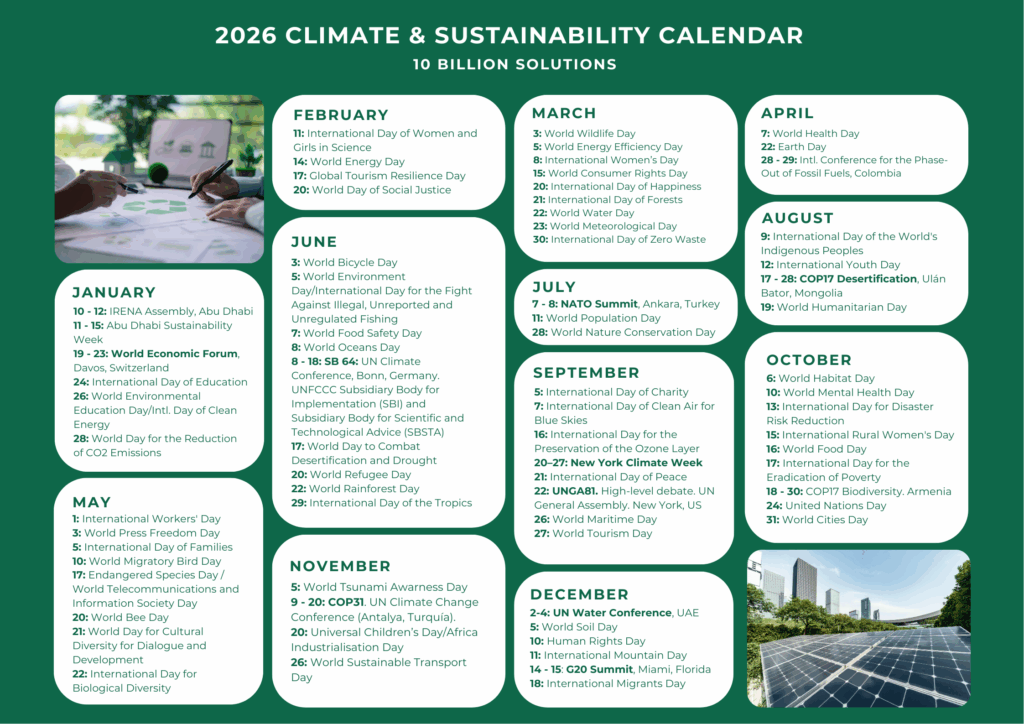
January: change in climate cooperation and economic forums
In January, the United States’ official withdrawal from the Paris Agreement changes the dynamics of international cooperation. Although this affects climate action globally, many cities, regions, and companies continue with their own climate commitments. In addition, the World Economic Forum in Davos brings together political and business leaders, offering opportunities to generate content that connects economics, sustainability, and innovation.
March to April: scientific innovation and climate solutions
During these months, international forums on innovation and climate science are held, where new technologies, public policies and adaptation strategies are presented. Participating in these conversations allows communicators to highlight concrete solutions and alliances between sectors, demonstrating leadership and knowledge in sustainability.
June: international environmental awareness days
World Environment Day is celebrated on 5 June and World Oceans Day on 8 June. These dates are key for launching awareness campaigns and showcasing concrete commitments to sustainability. Adapting communication to these days allows you to connect with a wide audience and generate multimedia content that resonates across different channels.
November: COP31 and monitoring of commitments
COP31 in Turkey will be the most important climate summit of the year. At this event, national commitments will be reviewed, financing mechanisms will be discussed, and energy transition strategies will be evaluated. Preparing content before, during, and after COP allows you to remain relevant in the global conversation and offer comparative analyses of progress and gaps.
Geopolitical context and its impact on climate communication
In 2026, several geopolitical factors directly influence how messages about sustainability are constructed and perceived. The United States’ withdrawal from the Paris Agreement sparks debates about global leadership and forces an analysis of alternative cooperation strategies. International conflicts affect investment, energy security, and public attention, while new economic and trade measures incorporate carbon criteria into international trade, generating debates about competitiveness and environmental responsibility.
How to use the calendar to communicate with impact
Plan ahead
Assigning strategic themes to each month allows you to combine official dates, international events and geopolitical context. This makes it easier to organise coherent communication campaigns that are aligned with moments of heightened attention.
Create relevant and reliable content
Basing messages on data, official reports and verified sources generates credibility. Combining formats such as articles, infographics and videos increases the reach and understanding of complex issues.
Participate in the global conversation
Joining debates on international days or climate conferences allows you to amplify messages and collaborate with strategic allies, reinforcing the position of the organisation or brand.
Adapt the message to the local context
Localising the narrative helps to show how international events impact the region, sector or specific audience, making messages more relatable and applicable.
2026 will be a year marked by the interaction between the structured climate agenda and geopolitical challenges. Integrating these elements in a coherent and realistic way into communication allows for the generation of solid, relevant and strategic content, consolidating the position of any organisation or professional as a reliable voice in sustainability and climate action.
Services and training to enhance your communication
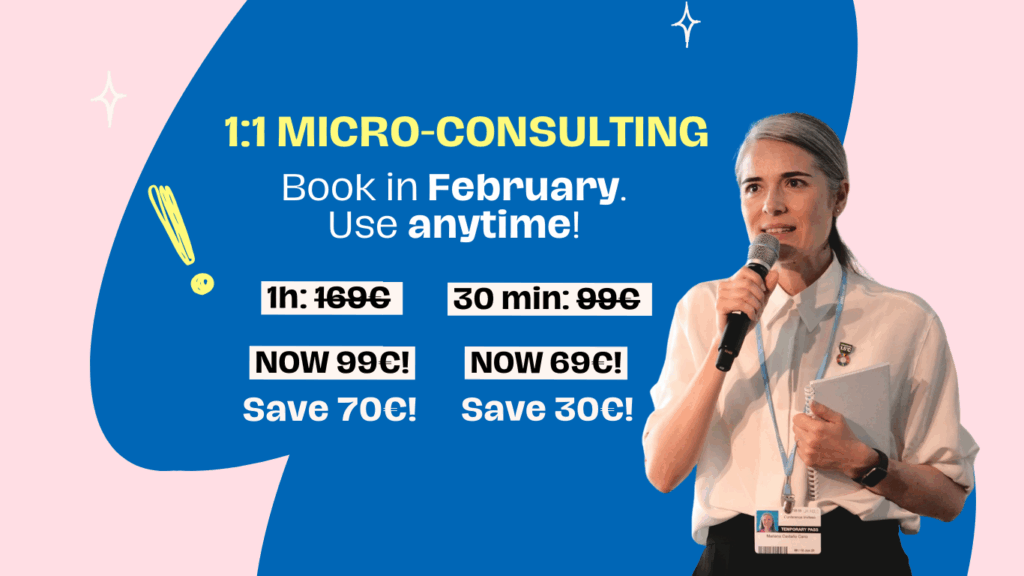
At 10 Billion Solutions, we support professionals and organizations in taking their communication to the next level. We offer strategic services and micro consulting, as well as specialized training in moderation, public speaking, and media skills, designed to help your message reach its audience with clarity, impact, and confidence. Whether you want to prepare interviews, improve presentations, or refine your communication strategy, we are available to provide tailored, practical support whenever you need it. Contact us and find out how we can support you and book your micro consulting session today.