Moderating sustainability events: tips, preparation, and best practices
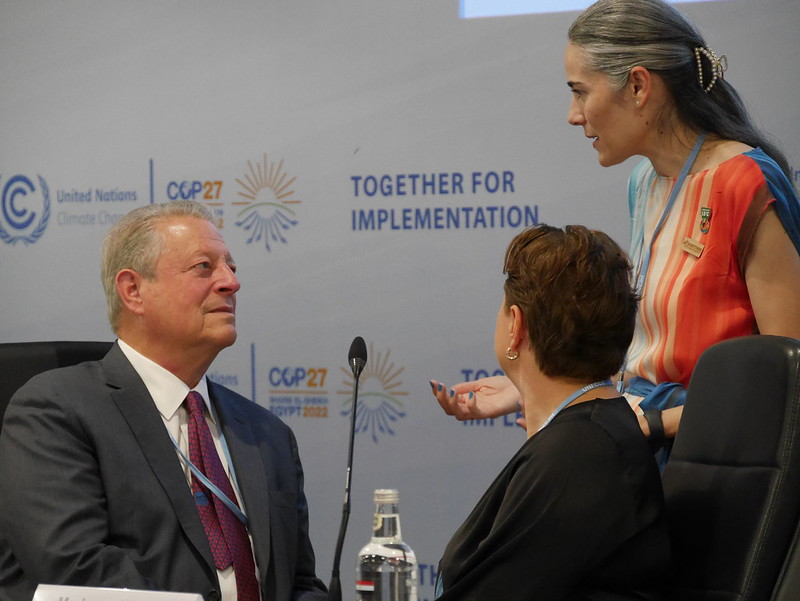
Moderating sustainability events is much more than introducing speakers or following a script: it is facilitating meaningful conversations, keeping ideas flowing and ensuring that participants leave with concrete reflections and actions. In a context where environmental, social and economic issues are intertwined, a well-prepared moderator can make the difference between an informative event and a truly inspiring one.
What makes a good event moderator?
Effective moderators do more than just manage time: they facilitate dialogue, encourage relevant questions and create an environment where all voices (experts, audience and panellists) feel heard. At sustainability events, this involves balancing technical, scientific and human perspectives with the common goal of driving real solutions.
Sustainability encompasses complex issues such as the circular economy, renewable energy, environmental justice and responsible consumption. Here, the moderator’s job is also to translate technical information into accessible language without losing accuracy.
Preparation: key points before going on stage
A moderator’s preparation is essential. Here are some practical tips:
1. Research the content and the speakers
Familiarise yourself not only with the central theme of the event, but also with the background of each guest. This will allow you to:
- Ask more in-depth and personalised questions.
- Anticipate possible constructive disagreements.
- Create connections between different approaches.
2. Practise your speech and communication skills
Public speaking is a skill that is strengthened with constant practice. Rehearsing your speech helps you gain confidence, adjust timing and anticipate possible questions from the audience. It’s not just about memorising words, but about connecting with your audience: use variations in tone, strategic pauses and open body language to reinforce your message.
You can record yourself or practise in front of someone you know to get feedback and adjust your style. Another useful technique is to simulate difficult or unexpected questions, so that you are prepared to handle unexpected situations without losing your composure.
To perfect your public speaking skills, you can read our post on how to learn to speak in public.
3. Organise participatory activities
Include time for questions, quick polls or brief reflections from the audience. An interactive event leaves a more lasting impression. Get inspired by tips on creativity and event organisation.
Stress management: a key factor
Moderators and organisers face a certain amount of pressure: tight schedules, demanding audiences, technical glitches… All of this can cause stress. Managing it properly prevents mental blocks and allows you to respond clearly and calmly. For practical strategies you can implement before your event, check out our article on managing pre-event stress.
Some quick tips:
- Take a few deep breaths before going on stage.
- Visualise the event flowing smoothly.
- Have a plan B for technical failures or unexpected setbacks.
Consistency and setting an example in sustainability
It is not enough to talk about sustainability: the event itself must reflect these principles. This means paying attention to the materials and practices used, such as avoiding single-use plastic bottles, opting for responsible catering, reducing paper consumption and choosing venues with environmental certifications. This consistency conveys credibility and reinforces the message: participants not only hear about sustainability, but experience it throughout the event. A conscious moderator can even highlight these decisions to inspire others to replicate them in their own projects.
Moderation and sustainability: beyond logistics
At sustainability events, it is important that the moderation reflects the values of the topic. This means:
- Encouraging inclusion: giving space to diverse voices.
- Encourage critical thinking and collaboration.
- Avoid oversimplification and present information honestly.
- Inspire action: end the event with practical ideas that attendees can implement.
A committed moderator has the power to move not only words, but attitudes.
Helpful tips for the day of the event
Arrive early to familiarise yourself with the space and technology, establish signals with speakers to manage time without abrupt interruptions, maintain a warm and professional attitude in the face of unforeseen events, and always have a backup plan if a presentation changes at the last minute.
Moderation is not a secondary role: it is the bridge that connects people with knowledge and action. With preparation, communication skills, stress management, and an audience-focused approach, you can transform a sustainability event into a memorable and inspiring experience.
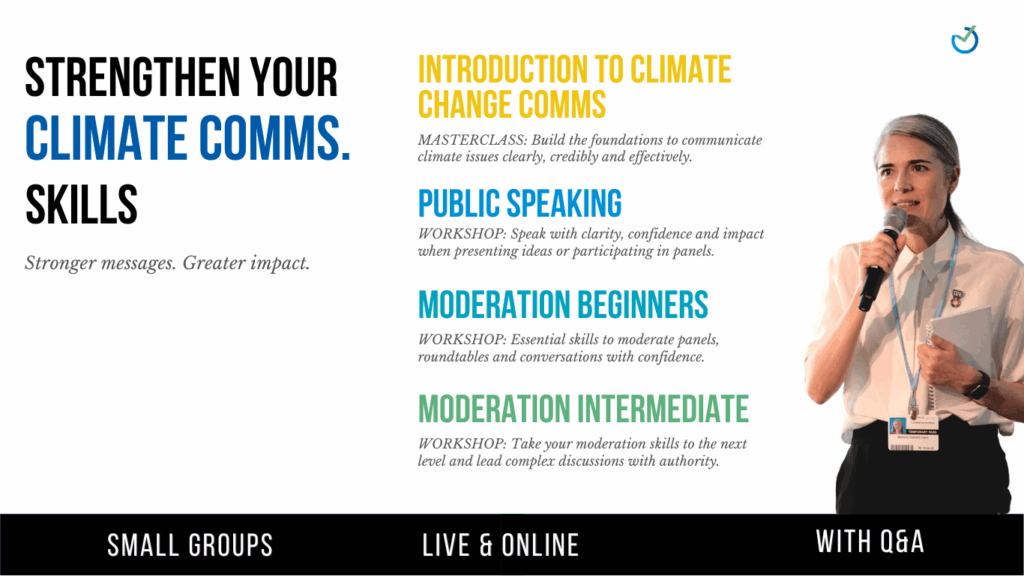
If you need support with your preparation as a moderator or want personalised advice on public speaking or event planning, consider our micro consulting service, designed to help you shine in every presentation.