A decade of challenges, progress, and lessons for global climate action
Although last December we celebrated 10 years since the adoption of the Paris Agreement on climate change, 2026 will be when we mark the tenth anniversary of its entry into force.
What remains the most important agreement for international climate governance was approved at COP21 in Paris on 12 December 2015. A few months later, on 22 April 2016, chosen to coincide with Earth Day, the agreement was opened for signature with a solemn ceremony at the United Nations headquarters in New York. On that day alone, 174 countries plus the European Union signed the agreement.
From that day on, each country would have to ratify the agreement internally and deposit that ratification with the UN. As stated in the text of the agreement, it would only enter into force 30 days after reaching the minimum threshold of 55 ratifications by countries that together emit at least 55% of global greenhouse gas emissions. On 4 November 2016, the international agreement coordinating the global response to climate change would thus enter into force, in a context of growing scientific, social and economic urgency.
Although the agreement entered into force in record time and has since influenced the climate policy of countries and companies, strictly speaking, its period of validity would begin in 2020, as the plans (nationally determined contributions) submitted by countries to comply with the agreement would begin to count from that year, when the Kyoto Protocol expired.
Ten years after the adoption and entry into force of the Paris Agreement, and despite the profound political upheavals the world is undergoing, this agreement remains the central reference point for global climate action. Understanding the objectives of the agreement and the progress it has driven in these ten years is key to understanding where we are in terms of climate action and what could happen in the coming years.
COP21 in Paris: the origin of a historic agreement
The Paris Agreement was adopted on 12 December 2015 during COP21, held in Paris, chaired by France and co-organised by the United Nations Framework Convention on Climate Change. After two weeks of intense negotiations, 195 countries and one regional organisation, the EU, approved by consensus a new global framework to tackle global warming.
This agreement came six years after the failure of COP15 in Copenhagen in 2009, where no legally binding agreement was reached. Paris marked a turning point: for the first time, all parties, both developed and developing countries, made climate commitments within the same flexible and progressive framework.
What the Paris Agreement established
The Paris Agreement defined three major long-term goals:
- Limit the global average temperature increase to well below 2°C by 2100 compared to pre-industrial levels (around 1850), and strive to limit the increase to 1.5°C.
- Increase resilience and adaptation to the impacts of climate change.
- Align financial flows with low-emission and climate-resilient development.
To achieve these goals, the Agreement introduced an innovative approach based on Nationally Determined Contributions (NDCs), i.e. climate commitments defined by each country and to be updated every five years to progressively increase ambition.
Progress and transformations over the last ten years
Over the last decade, the Paris Agreement has driven significant changes in the global climate agenda. Some of the most significant milestones include:
- 2015: Adoption of the Paris Agreement.
- 2016: The Paris Agreement enters into force after reaching the necessary ratification threshold, initiating its implementation at the global level. The first NDCs begin to be implemented and the participation of non-state actors such as cities, companies and regions is strengthened.
- 2017: Upon taking office, US President Donald Trump announces his intention to withdraw the United States from the Agreement, causing international tensions. The withdrawal would take effect in November 2020.
- 2021: With the arrival of Joe Biden, the United States returns to the Paris Agreement on 19 February 2021. That same year, at COP26 in Glasgow, the urgency of keeping the 1.5°C limit alive was hightened and key rules for the implementation of the Agreement were advanced, including transparency, emissions monitoring and NDC review mechanisms.
- 2022–2024: Some of the warmest years since measurements began are recorded. Science confirms that the world is dangerously close to the 1.5°C threshold. On the other hand, the energy transition is accelerating, with historic growth in renewable energy, energy efficiency and electric mobility.
- 2023: At COP28 in Dubai, the ‘UAE Consensus’ is adopted as a result of the first Global Stocktake of what has been achieved so far with the agreement. For the first time in a final COP decision, it includes a call to ‘move away from fossil fuels in energy systems’ in a fair, orderly and equitable manner to keep 1.5 °C within reach. However, since then, that decision has not yet been translated into specific measures to reduce dependence on fossil fuels, the primary cause of climate change.
- 2025: At the start of his second term, Donald Trump announces his intention to withdraw the United States from the Paris Agreement once again; the formal withdrawal will take place on 27 January 2026. COP30 took place in 2025 in Belém (Brazil), coinciding with the tenth anniversary of the adoption of the Paris Agreement. This Conference of the Parties fails to reach an agreement on phasing out fossil fuels, but Brazil promises to work towards this goal in 2026. Read a detailed analysis of the results of COP30 in this article.
Although the member countries of the agreement have failed so far to present climate plans ambitious enough to meet the agreement’s temperature limit, it must be recognised that over the last ten years, the Paris Agreement has also served as a reference for some governments, companies, cities and financial institutions to align strategies, set climate neutrality targets and develop new low-carbon technological and financial solutions.
Global obstacles: wars, misinformation and crises of confidence
Although the Paris Agreement has guided international climate action, it has also faced headwinds that have complicated and slowed progress:
War and its impact on the climate agenda
Recent geopolitical conflicts, such as the war in Ukraine, have had collateral effects on investment in energy transition and market stability. Energy insecurity caused by war crises has led some countries to reorient resources towards fossil fuels in the short term, diverting attention and funding that could have supported decarbonisation and climate resilience.
Misinformation, denialism and climate scepticism
Another persistent challenge has been the proliferation of misinformation and denialist narratives that seek to discredit scientific evidence on climate change or downplay its urgency. This has fuelled a breeding ground for scepticism that not only influences public opinion but also erodes the political will to take bold and transformative decisions. You can read more about this phenomenon here.
Crisis of confidence in institutions
Climate action is also affected by a crisis of confidence in public and private institutions. The loss of credibility of governments, businesses and even international organisations hinders the cooperation needed to implement comprehensive solutions. This social and political divide is a real obstacle to the climate and sustainable transformation demanded by the Paris Agreement.
A decisive decade ahead
The Paris Agreement remains a key instrument for tackling climate change, but it is not the only one, and neither governments nor companies or cities should wait for the next COP to take the measures within their power to reduce greenhouse gas emissions or invest in resilience.
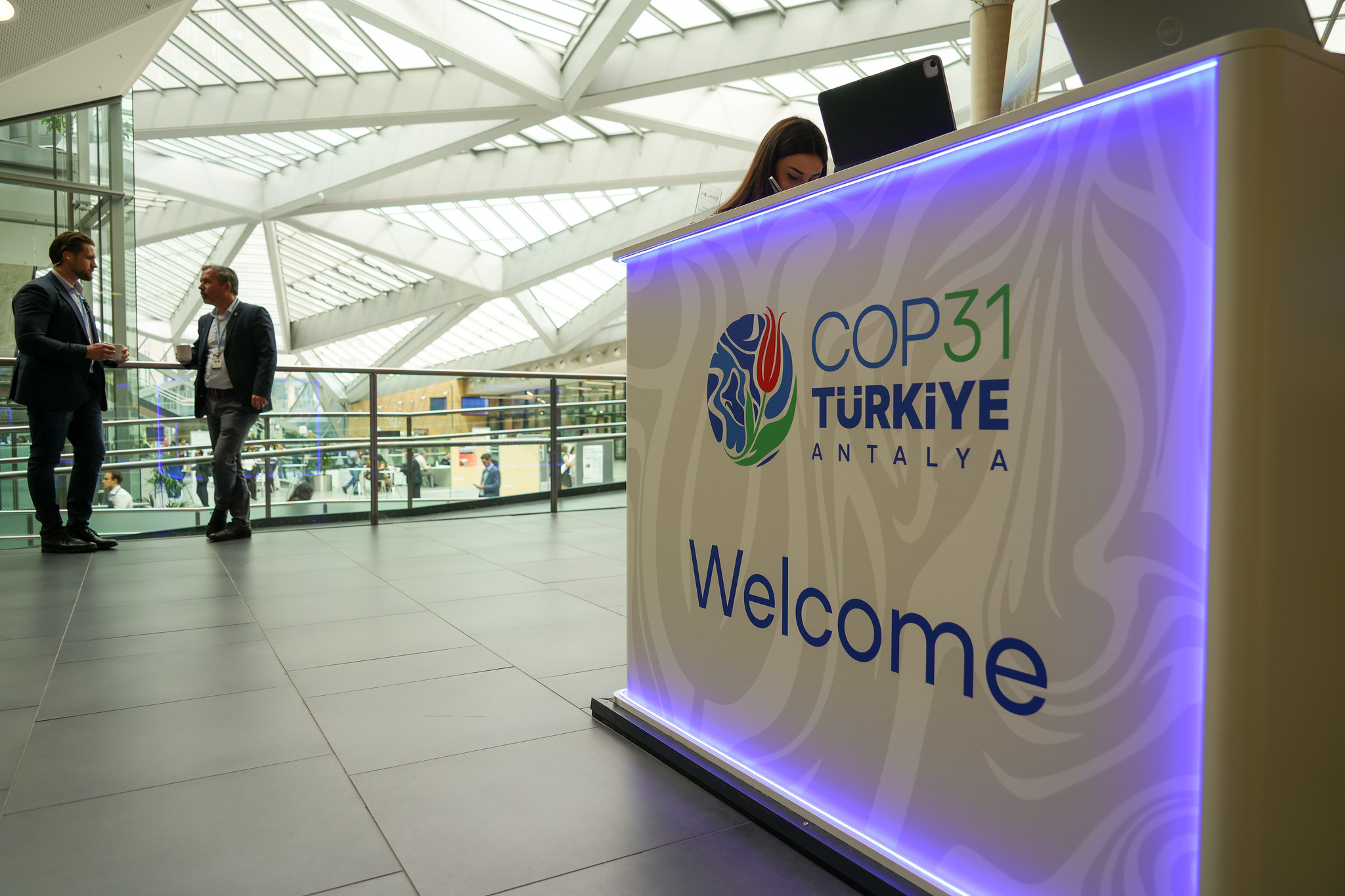
At the institutional level, the climate agenda continues with new key events, including an international conference promoted by Colombia and the Netherlands to accelerate the phase-out of fossil fuels, reflecting how the debate on the end of fossil fuels is also gaining momentum outside the formal framework of the COPs. Following COP30, upcoming conferences include COP31 in Turkey and COP32 in Ethiopia, which will play a central role in updating commitments.
Authorship: 10 Billion Solutions – Climate and sustainability communication
You are invited to use and reproduce this article published under Creative Commons license CC BY. This license allows you to reuse the work, but credit must be provided in all cases to 10 Billion Solutions.